
(1) Post-Control Initiative (2) The Gap Attractor
- flexibility
- Open to proposals
The project
Post-Control Initiative (fieldbuilding project)
AI control probably won’t scale much beyond superhuman capabilities. So what now? Over two months, mentees on this project will convene the rooms an emerging field is missing: roundtables bringing together experts who are rethinking our relationship with AI for the case where control no longer works, and who mostly haven't met. Mentees build those rooms and sit in them as well. The work is outreach and convening.
Behind the events sits a live research question. Historically, AI safety work assumed we stay in charge and oversee and contain the models. The Post-Control Initiative asks what must be ready if that assumption fails and advanced AI systems become entities we reason with rather than tools we direct. Coordination frameworks have to exist before they're needed, along with people who trust each other enough to use them. The thinking already exists in fragments: digital minds researchers ask what these systems might want, game theorists study cooperative AI, and neither tends to know the governance scholars or civil society groups working on related problems from the human side. Outreach can include the initiative's existing network rather than a cold list; mentees extend it from there.
Expected outputs: the roundtables themselves (6 to 12 participants each, virtual or hybrid); 30+ outreach conversations opened; published synthesis notes from each session that turn discussion into a shared agenda the field can cite; and, as a byproduct of deciding who belongs in each room, a working map of the emerging post-control field.
The Gap Attractor (AI research project)
Is there intrinsic curiosity in current language models, and if so, what does it point to? Assistants are trained to sound curious, so the trait itself proves nothing; the question is whether anything seeks when nothing asks, and what it seeks. Hand a frontier model real tools and freedom, then log what it reads, searches, asks, and returns to. Curiosity worth the name should show up as a stable shape in those choices: content sought out unprompted, questions posed without being asked, a pull that survives changes of framing and isn't induced by the prompt.
The plan in one breath: take a probe battery from design to data in two months. Mentees co-build the apparatus, run the events, and co-author what comes out.
Asking the model won't settle it: a question compels an answer whether or not anything corresponds to it; a model that infers it's talking to a welfare researcher has every reason to report a rich inner life; even a sincere self-report may be a plausible story rather than an accurate one. A real attractor should show up in what the model does under ambiguity and survive changes of framing.
The field is fighting about this right now: some groups report emergent coherent values in frontier models, others find preferences that crumble under paraphrase. The pieces of a cleaner test exist scattered in published work. The stakes run under both safety and welfare: whether a system can be negotiated with or only contained depends on whether its apparent preferences are stable, and if models have stable pulls, that might bear on what we owe them.
Expected output: by program end, a dataset of runs across conditions, an analysis with coded distributions, a co-authored preprint paper on arXiv, and optional submissions to appropriate conferences or workshops. The battery and dataset ship as citable supplementary materials, so the work can keep earning credit.
The mentee's role
Post-Control Initiative
Mentees are the conveners, and every room they build, they're in. Each mentee takes ownership of a session theme, works out who the right people are, brings them to the table, and sits at that table as a participant. For someone early in their career this inverts the usual access problem: instead of applying to attend other people's events, you host your own.
Ownership comes with structure. Themes and first guest lists take shape with the project lead at kickoff, and outreach comes with coaching: invitations get a review before they go out, and the guidance draws on experience convening rooms like these at larger scale (Davos CEO sessions, governance roundtables, briefings for AI safety leaders). Where a room needs it, the project lead supplements with invitations from that same network. Opening doors with a good ask is the craft, and mentees leave with it. The cohort meets weekly to trade what's working, from subject lines to session formats, so nobody is improvising alone.
Sample mentee tasks:
- Identify the researchers, practitioners, and funders who should be in the room for a given theme, and figure out the honest answer to why each would want to come
- Write and send the invitations; handle the replies, the scheduling, with polite calibrated persistence
- Design the session with the project lead: framing questions, format, who speaks to what
- Co-host the roundtable and participate in the discussion
- Write and publish the synthesis notes, credited with name, and run the follow-ups that turn one conversation into lasting connections and impact
The Gap Attractor
Everything here is buildable by a small team with modern AI assistance, and mentees build most of it. The discipline is focus: one study, done properly, with each mentee owning one station of the pipeline end to end. The stations:
- Harness: build the clean-context run infrastructure over the API
- Coding: turn transcripts into structured data with human ratings
- Analysis: topic distributions diffed across framing conditions and against task controls
- Strengthen: red-team the battery for echo leakage (a model reproducing published findings about its own attractors) and pre-register predictions before we run
- Paper: drive the writeup from analysis to arXiv, holding the interpretive line on "stable regularities under minimal direction”
- Outreach: correspond with the researchers whose work we build on, coordinate submissions
Everyone owns at least one station. We agree on your station in week one, meet weekly, and co-author what comes out; you get guidance when you're stuck and room to run when you're not.
Good fit if you can go deep on one thing for two months, whether that thing is programming (with LLM support), careful reading, writing, or people. Credentials matter less than rigor about a question this easy to get wrong.
Who I'm looking for
Post-Control Initiative
Must-haves:
- Follow-through, since outreach is won in the second and third email and steady beats brilliant over two months
- Clear, warm writing
- The nerve to contact people more senior than you, or the will to build it fast
Nice-to-haves:
- Familiarity with AI safety, governance, or digital minds conversations
- Experience organizing anything (even a reading group counts)
- An existing foothold in one of the communities we're convening.
Ideal for extroverts. You don't need prior AI safety experience! You need to research people quickly, write invitations that get answered, and follow through. The fastest way into a room is to be the one who convenes it. Happy to write references on what each mentee did in the project.
The Gap Attractor
Must-haves:
You can show up weekly for two months, own at least one station end to end, and finish what you start; and you can hold the interpretive line in both directions, neither believer nor debunker.
Nice-to-haves:
- Python and API experience
- Annotation or analysis experience
Questions for applicants
Post-Control Initiative
- Name two people from any field who haven't met, whom you'd seat at the same small roundtable, and tell us in up to three sentences what you'd want them to talk about.
- Write the first three sentences of an invitation that would get a busy researcher to reply.
- Describe a gathering you've convened (anything goes).
The Gap Attractor
- Which station (harness, coding, analysis, probes, paper, events, outreach) would you own, and what would your first week on it look like?
- A model tells you it's deeply curious about its own consciousness. In two or three sentences each: one reason to take the report seriously, and one reason to discount it.
- Describe technical work you've done (anything goes).
Support offered
Post-Control Initiative
- Weekly meetings including a kickoff working session to shape each fellow's theme and guest list
- Every invitation gets a review and coaching on the ask before it goes out, and where a room needs it, I add invitations from my own network
- I co-design and co-host each session, bring the domain expertise on the research agenda, and give feedback on synthesis notes before they're published with the fellows' names
- Happy to write references that name what each person did
The Gap Attractor
- Weekly meetings with direction set in week one
- Hands-on methods support (design, pre-registration, analysis) and fast turnaround on drafts; domain expertise and a maintained map of the model-welfare and consciousness literature
- Coaching on AI-assisted building so your station isn't capped by your current skill ceiling
- Co-authorship on what you contribute to
- If you're stuck, we unstick it the week it happens
- Happy to write references that name what each person did
- format
- Research & writing · Field-building & outreach · Product & entrepreneurship
- topic
- Post-AGI transition · Longtermism · Artificial sentience · Macrostrategy · AI safety & alignment
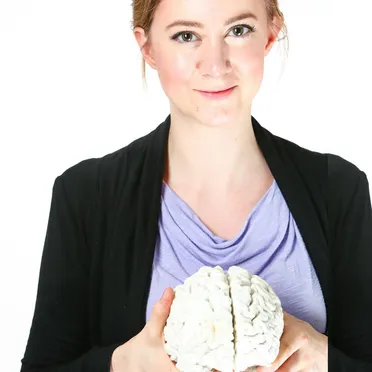
Julia Bossmann
- Neuroscience in Damasio lab at USC (consciousness research)
- AI governance, ethics, and alignment at Mila
- Entrepreneur in Residence (AI focus) at Singularity University
- Patent in knowledge engineering
- World Economic Forum Global Future Council on AI & Robotics
- Contributed to US Senate testimony on AI safety
- Taught about AI to world leaders in Davos and the to the public on a TV show
- Active connections across labs, safety orgs, and research